
Is Africa Ready for AI Revolution?
As Africa continues to emerge as a critical arena for power contestation in cyberspace, the big question we got to ask ourselves is: Is Africa Ready for AI Revolution? The recent artificial intelligence (AI) inflection point presents an opportunity for Africa to address some of its most pressing challenges, such as poverty, disease, and climate change. A seismic shift is taking place with the emergence of advanced open-source AI models overriding the longstanding barriers to innovation. The new models are offering developers and businesses unrestricted access enabling unheard-of levels of customisation and innovation at a fraction of the conventional costs and offering tools to create solutions that are tailored to the continent’s unique needs. Africa’s digital economy is large and is poised to grow. With an estimated market size of $115 billion, it is expected to grow to about $712 billion by 2050. This is attributed to the digital economy approaching its S-curve, a period of accelerated, momentous growth that will impact the continent’s GDP, job creation and the overall economic outlook. AI has the potential to be used to improve healthcare, education, public service delivery, agriculture, and other sectors. For example, AI can be used to support smart agriculture, support climate adaptation measures, personalize learning, and to optimize service delivery. However, there are also concerns that Africa will merely be a casual observer in the next transformative wave of human development as the vast majority of AI research and development is happening in the Global North.
Africa's contribution to technological development has also been accompanied by several challenges. Weak regulatory, policy and oversight frameworks that have not kept pace with technological development have contributed to exploitation and abuse. The African Union has played a key and critical role in coordinating AI governance in Africa through a Continental AI Strategy that aims to establish ethical and equitable AI frameworks. The main aim of AI governance in Africa is on robust data protection laws and regulations, as the access to and control over data is crucial for responsible AI development. Many African countries are already developing their own national AI strategies that outline how they plan to leverage AI for socioeconomic development while mitigating potential harms. Countries such as Benin, Egypt, Nigeria, Mauritius, Rwanda, Senegal, Algeria and Kenya have made notable efforts in releasing their national AI strategies. It is worth noting that Rwanda is the only country with a national policy while other countries such as Ethiopia, Ghana, Morocco, South Africa, Tanzania, and Mauritania are making significant steps towards defining their AI strategies.
It is intriguing to note that several African countries with existing AI strategies appear to have considered some of the foundational principles in the AU strategy despite some of the efforts predating its adoption. This demonstrates some convergence in AI governance across the continent which is pegged on emphasis on: Adopting global best practices, as seen in Rwanda’s national AI policy; Acquiring high-quality and diverse data sets for AI development, as seen in Rwanda, Benin, and Nigeria; Stimulating adoption of AI in similar industries, as in Mauritius; Adopting AI in public and private sectors; and Adopting and implementing ethical principles for AI that respect human rights.
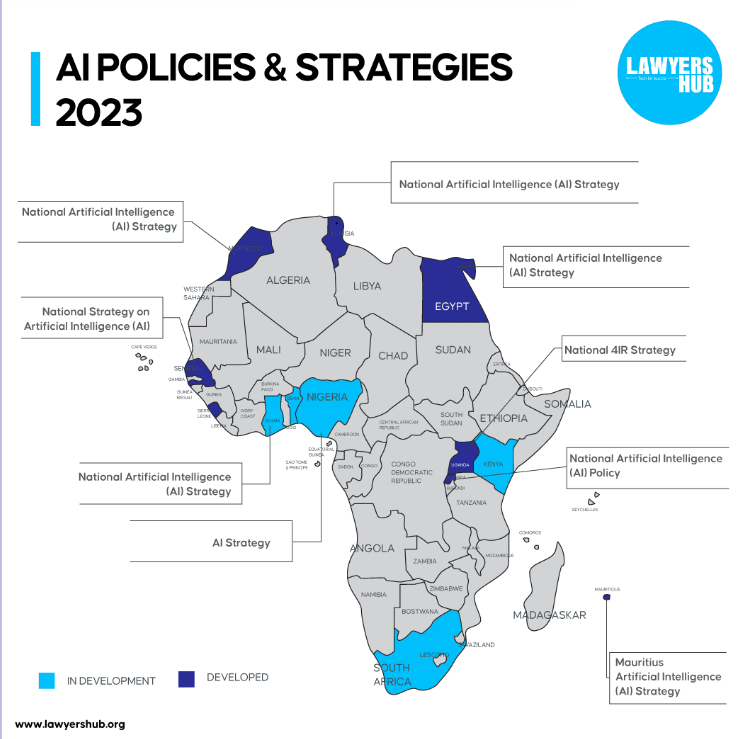
Figure 1: National AI Policies and Strategies in Africa
Source 1: Lawyers Hub
On the 3rd – 4th April 2025, the Centre for the Fourth Industrial Revolution and the Ministry of ICT and Innovation in collaboration with World Economic Forum hosted the Inaugural Global AI Summit on Africa in Kigali Rwanda under the theme: AI and Africa’s Demographic dividend: Reimagining Economic Opportunities for Africa’s Workforce.The Summit aimed to address how AI can be harnessed to create inclusive economic opportunities, foster innovation and enhance the skills of Africa’s workforce. This was particularly timely for the sake of capital accumulation for a continent with a population of more than 145 million people in the region living in extreme poverty given the threat that AI and Digitalisation pose to this with the likelihood of humans being replaced by technology in the future. Capital accumulation entails increasing an individual’s or nation’s assets through savings and investments with an aim of generating future wealth and economic growth. The summit climaxed with the announcement of the African Declaration on AI seeking to leverage the potential of AI to drive innovation and competitiveness to advance Africa’s economies, industries and societies, position Africa as a global leader in ethical, trustworthy and inclusive AI adoption, and to foster the sustainable and responsible design, development, deployment, use and governance of AI technologies in Africa. Besides this, there was the establishment of a $60 billion Africa AI fund to create a safe, inclusive and competitive African AI economy through foundational and catalytic investment. The Summit also sought to ensure that Africa becomes a ‘standard-maker, not a standard-taker’ in global AI governance. This will ensure that African nations are working towards developing homegrown AI strategies that reflect the continent’s unique context rather than adopting policies designed from the West or Asian economies. This is a call akin to AFRODAD’s call for making Africa a Ruler Maker, not a Rule Taker in the Global Financial governance.
Besides governance, there are infrastructural issues that Africa must address to be ready for the AI revolution. The continent is still struggling with digital connectivity, an important component in AI adoption. Despite the digital revolution being well underway in Africa, only 38% of the continent’s population is using the internet, a statistic way below the global average of 68%. Besides this, around 600 million people in Africa still lack reliable access to electricity which nearly half the continents population and more than 80% of the global electricity access gap. Electricity powered the second industrial revolution, but its access is still an issue at a time when there is focus on the fourth industrial revolution. This is a clear indication of how much catchup the continent must do be at par with the developed world.
We can only hope that the inaugural Global AI Summit on Africa held in April 2025 was a turning point in shifting focus from global conversations on AI to African-led action and that the launch of the Pan-African AI Council at the Summit will be a major step in Africa’s AI journey. The Global AI race is on, and Africa cannot afford to be a spectator!