- Home
-
About Us
- Our Journey
- Our Organisation
- Our Team
- Board of Trustees
- Theory of Change
- Opportunities
- Partners
- Strategic Priorities
- Strategic Plans
- Resources
- Flagships
- Campaigns
- News & Events
- Contact Us
- Popular Corner
AFRODAD at the 2026 Spring Meetings of the WB/IMF

Event Details
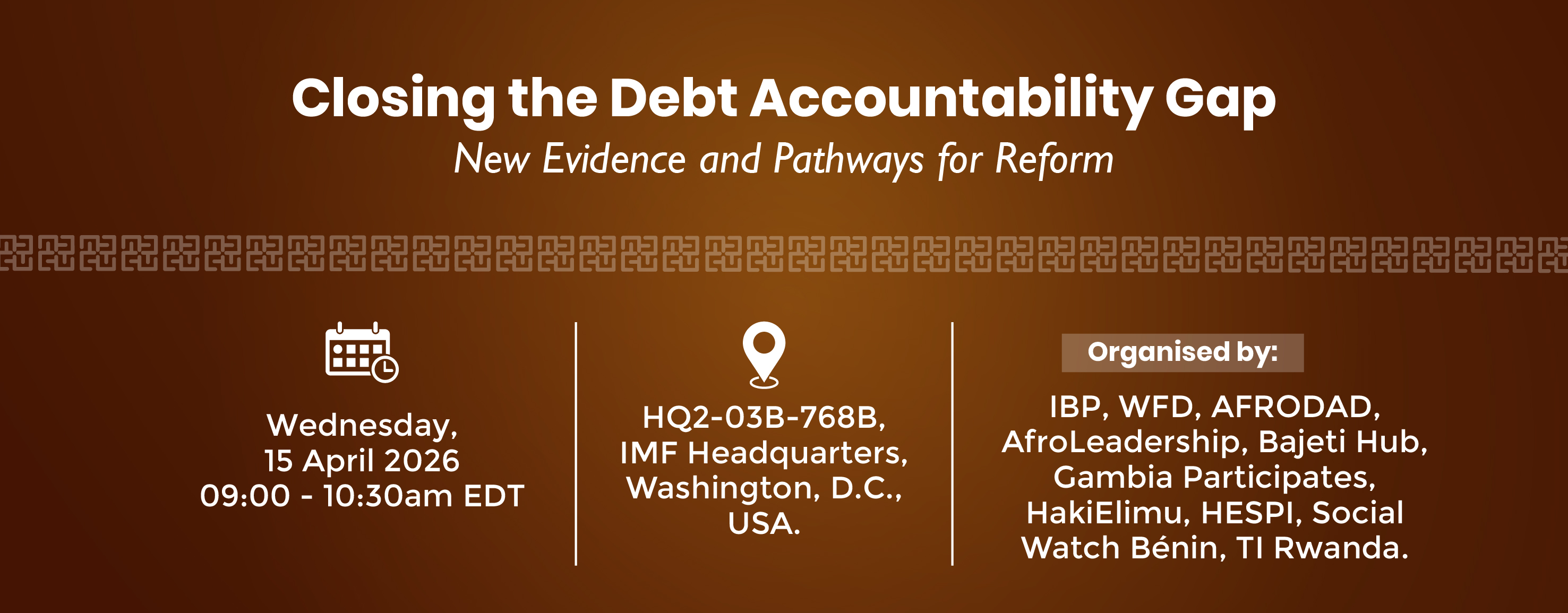
The session will examine growing concerns over public debt as many developing countries now spend more on debt servicing than on health or education, underscoring the importance of strong domestic accountability systems for borrowing. The discussion will explore shared bottlenecks and good practices, and consider how parliaments, governments, civil society, and development partners can work together to strengthen oversight, clarify mandates, and pursue reforms that improve public debt management and deliver better outcomes for citizens.
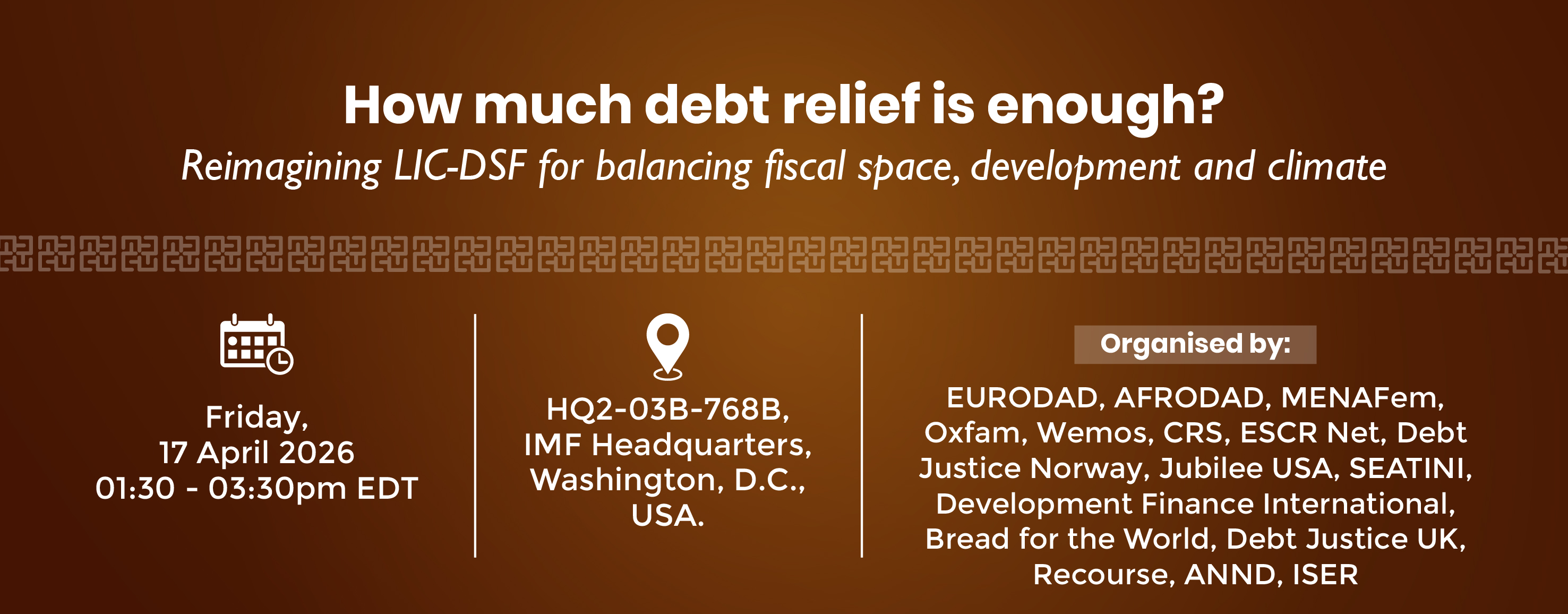
The IMF and WB are about to complete their review of the Debt Sustainability Framework for Low-Income Countries (LIC-DSF). This is the model that de facto determines how much debt relief countries facing debt restructuring get. It is critical to get it right, both to prevent debt crises and to avoid that countries in debt distress end up overindebted, even after debt restructurings. This session will be an opportunity to debate possible improvements into the LIC DSF, focusing on how it can better reflect the debt vulnerabilities. Furthermore, participants will share how the framework should capture increasing climate change vulnerabilities. Read AFRODAD’s analysis of the LIC DSF.